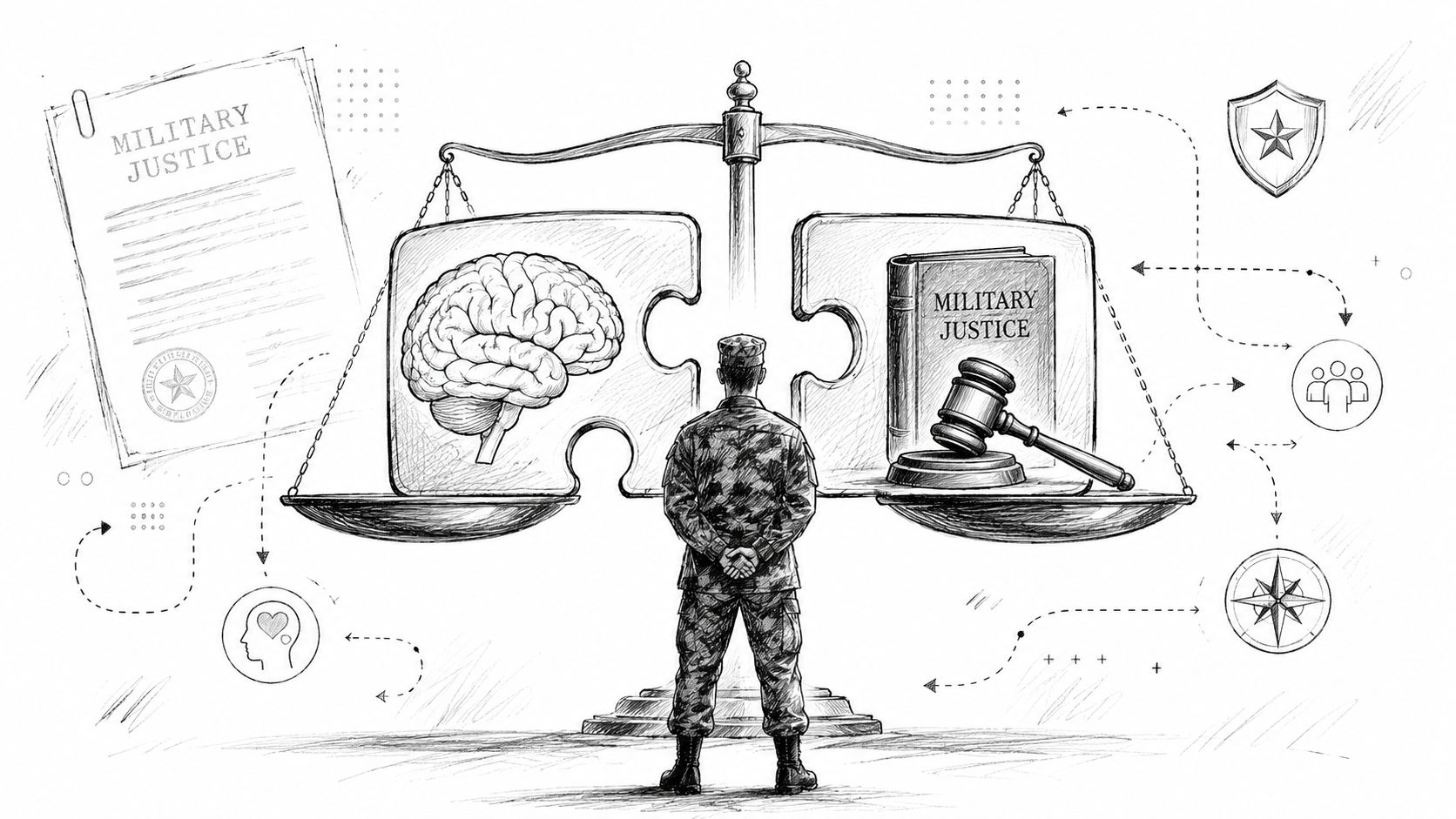
You’re probably reading this because someone in uniform, or someone you love, is falling apart under pressure and the military is acting like the only question is whether the case can keep moving. Maybe sleep is gone. Maybe the service member is paranoid, confused, shut down, manic, or saying things that don’t track. Maybe command is pretending this is just a discipline problem. Maybe trial defense is telling you a competency issue “might help,” but nobody is explaining the trap.
Here’s the blunt truth. A competency fight in the military justice system is not just a medical issue. It’s a control issue. If the government frames the service member first, the government usually controls the story, the doctors, the timeline, and the pressure. If the defense waits, the record gets built against the accused before the main fight even starts.
If competency is on the table, your job is not to “see what happens.” Your job is to protect the client’s rights, stop careless statements, and force a defense-led psychiatric strategy before the system labels the service member in a way that helps the prosecution more than the defense.
Table of Contents
- The Dusky Standard What Competent to Stand Trial Means
- The 706 Board How the Military Evaluates Competency
- Is Incompetence a Viable Defense Strategy
- Found Incompetent What Happens Next Under the UCMJ
- Critical Mistakes That Can Sink Your Competency Case
- Why Your Appointed Lawyer Is Not Enough
- Your Battle Plan and Immediate Next Steps
The Dusky Standard What Competent to Stand Trial Means
The law does not ask whether you’re a good soldier, whether command likes you, or whether you have a diagnosis. It asks whether you are competent to stand trial right now.
What the legal test actually asks
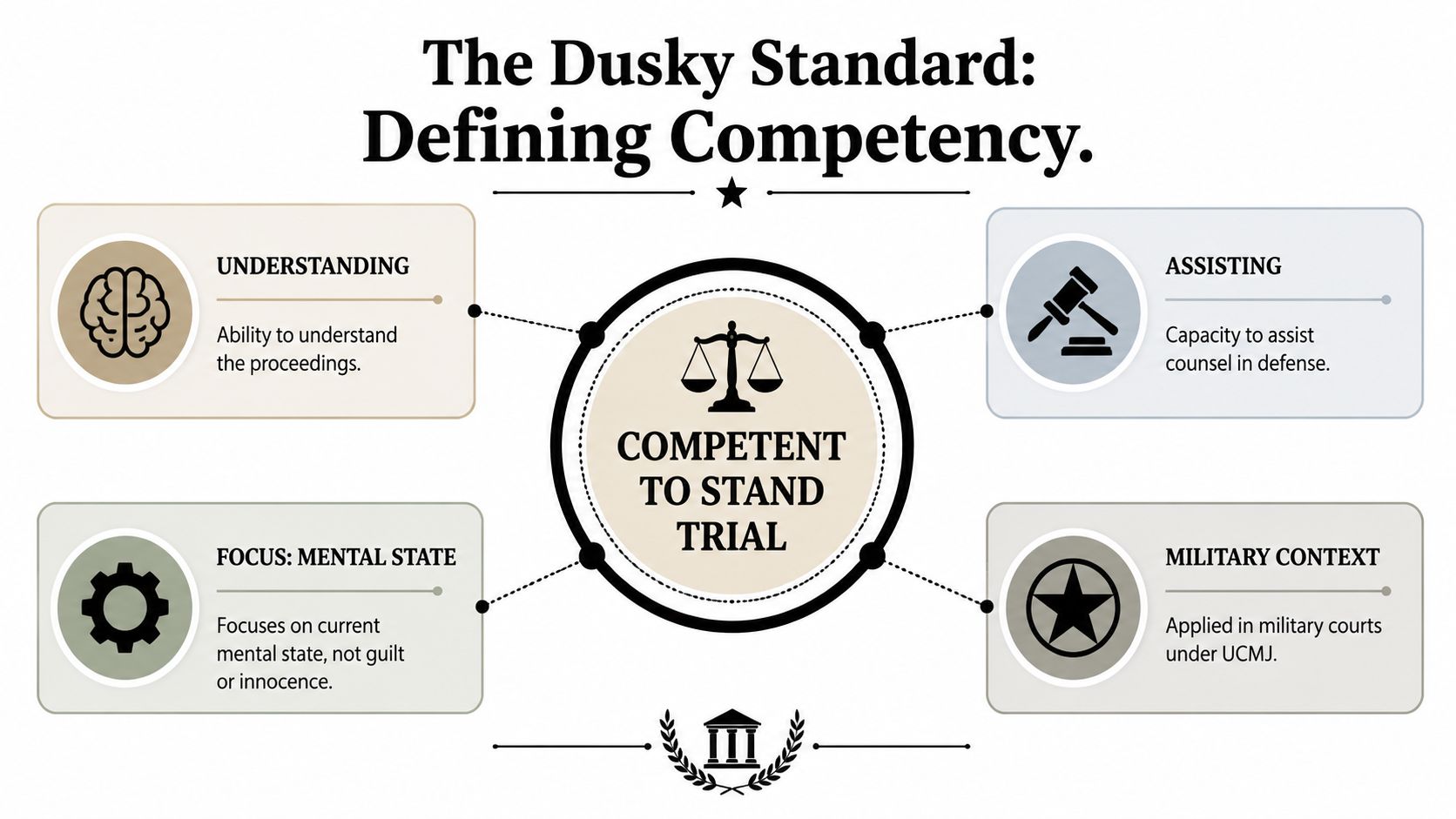
The governing rule comes from Dusky v. United States. The Supreme Court held that a defendant must have “sufficient present ability to consult with his lawyer with a reasonable degree of rational understanding” and must have “a rational as well as factual understanding of the proceedings against him”, rejecting lower standards like being merely oriented to time and place, as summarized in the Department of Justice competency guide.
That breaks into two real-world questions:
Can you work with your lawyer in a rational way?
Not just talk. Not just answer yes or no. Can you track advice, weigh choices, help identify witnesses, and make decisions that aren’t driven by delusion, panic, or gross confusion?Do you understand what’s happening in the case?
You don’t need a law degree. But you do need to understand the roles of the judge, counsel, charges, possible consequences, and what a trial entails.
A service member can know his rank, know the date, know he’s charged, and still not be competent to stand trial. Some accused service members can repeat facts but cannot rationally process risk, trust anyone, or make basic defense decisions.
Practical rule: Competency is about functional legal ability in the present. It is not a reward for looking calm in uniform.
Why this rule exists
This standard exists for a reason. Richard Bonnie explains adjudicative competency as serving three core purposes: preserving the dignity of the criminal process, reducing the risk of erroneous convictions, and protecting the defendant’s autonomy in making rational defense decisions, as discussed in this forensic psychiatry article on competency.
That matters in military cases because the system moves fast when command wants movement. If the accused cannot think clearly enough to defend himself, every other right becomes weaker. The right to testify. The right to remain silent. The right to decide whether to plead. The right to help counsel attack the government’s witnesses.
Here’s my view after years of dealing with broken systems and broken people in uniform. If your mental state keeps you from making rational defense decisions, the process loses legitimacy. A court-martial is not supposed to be an assembly line.
The 706 Board How the Military Evaluates Competency
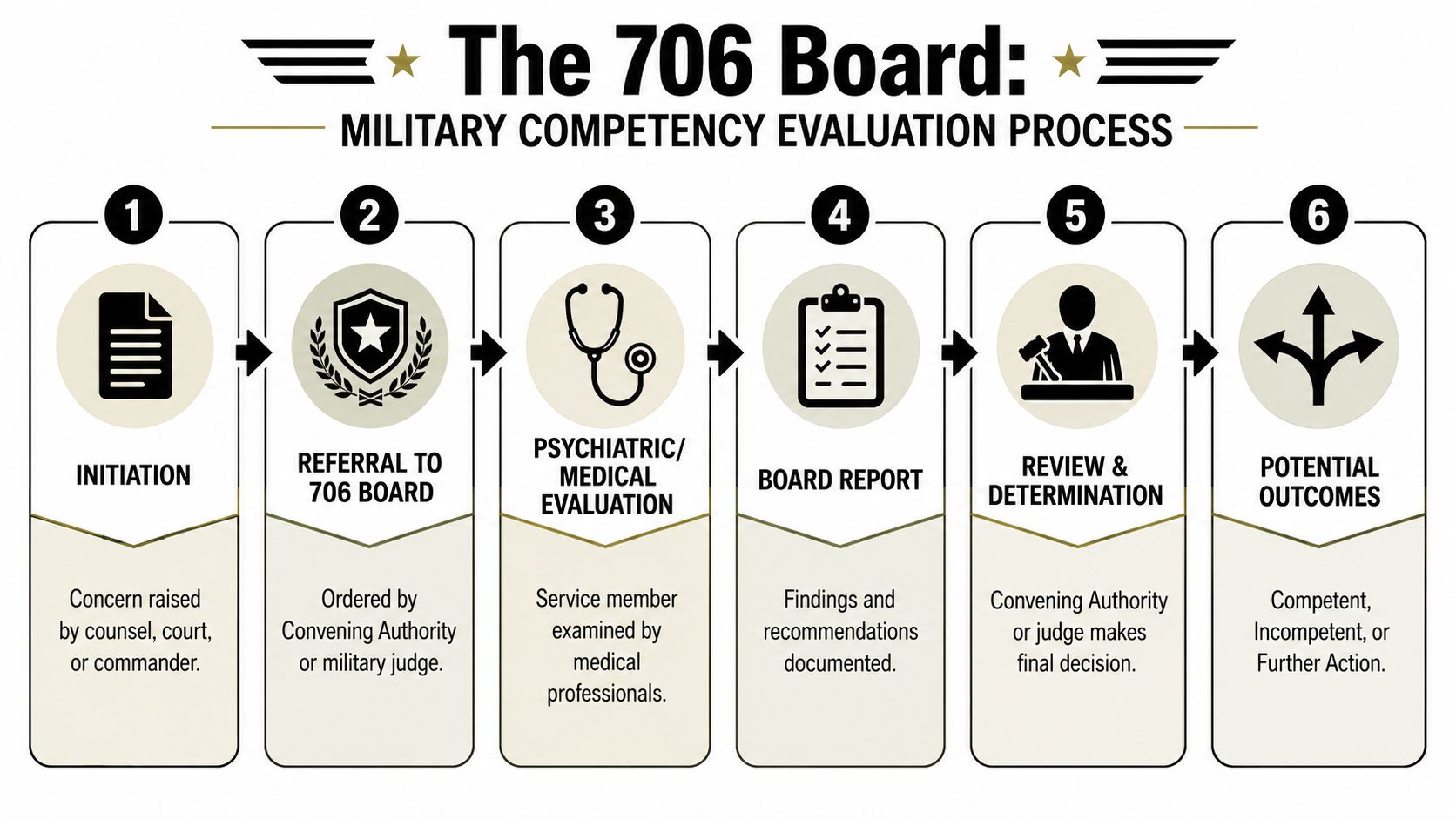
The military has a formal process for competency questions. It’s often called a 706 Board or a sanity board. Don’t let the label fool you. This is not a neutral wellness check. It is a government-run evaluation process that can shape the whole case.
Raising the issue
The issue can be raised by the defense, the prosecution, or the military judge. Sometimes the warning signs are obvious. The client is disconnected, responding to internal stimuli, wildly suspicious, unable to follow meetings, or incapable of making basic litigation choices.
Sometimes the trigger is subtler. The service member looks composed but can’t process consequences, can’t stick with a conversation, or keeps making decisions that have no rational relationship to self-protection.
If you need a general map of how military cases move, start with this guide to the UCMJ system and military justice. Then come back to the competency issue with a narrower lens.
The 706 Board order
Once competency becomes a serious issue, the court or convening authority can order the evaluation. In civilian court, some jurisdictions require proceedings to stop immediately once doubt is raised. For example, California Penal Code Section 1368 requires suspension of criminal proceedings when the court or a party expresses doubt about competency, as described in this forensic psychology discussion of competency procedure. Military practice has its own rules, but the practical lesson is the same. Competency is not a side issue. It can halt the path to trial.
The evaluation itself
Most service members imagine a long, careful psychiatric process. Sometimes it is. Sometimes it isn’t.
The examiner will usually ask about:
- Current understanding: What are the charges? What does a judge do? What does your lawyer do?
- Decision-making ability: Can you discuss plea choices, witnesses, testimony, and defense strategy?
- Mental health symptoms: Hallucinations, paranoia, mania, severe depression, disorganized thinking, memory problems.
- Behavioral consistency: Whether what you report matches records, observations, and prior history.
The danger is obvious. The evaluator is often part of a government system. That doesn’t automatically make the evaluator dishonest. It does mean you should stop pretending the process is free from institutional pressure.
Government doctors may focus on whether the case can proceed. Defense counsel must focus on whether the client can actually defend it.
The report
The report usually addresses whether the service member can understand the proceedings and assist counsel. That report can become the backbone of the government’s narrative.
A weak defense response at this stage is expensive. Once the file says the accused is malingering, stable enough, or merely difficult rather than impaired, the government gains momentum. If the report is sloppy, defense counsel should attack the methods, the assumptions, the record review, and the examiner’s failure to test real legal functioning instead of surface-level presentation.
Is Incompetence a Viable Defense Strategy
Sometimes yes. Sometimes absolutely not.
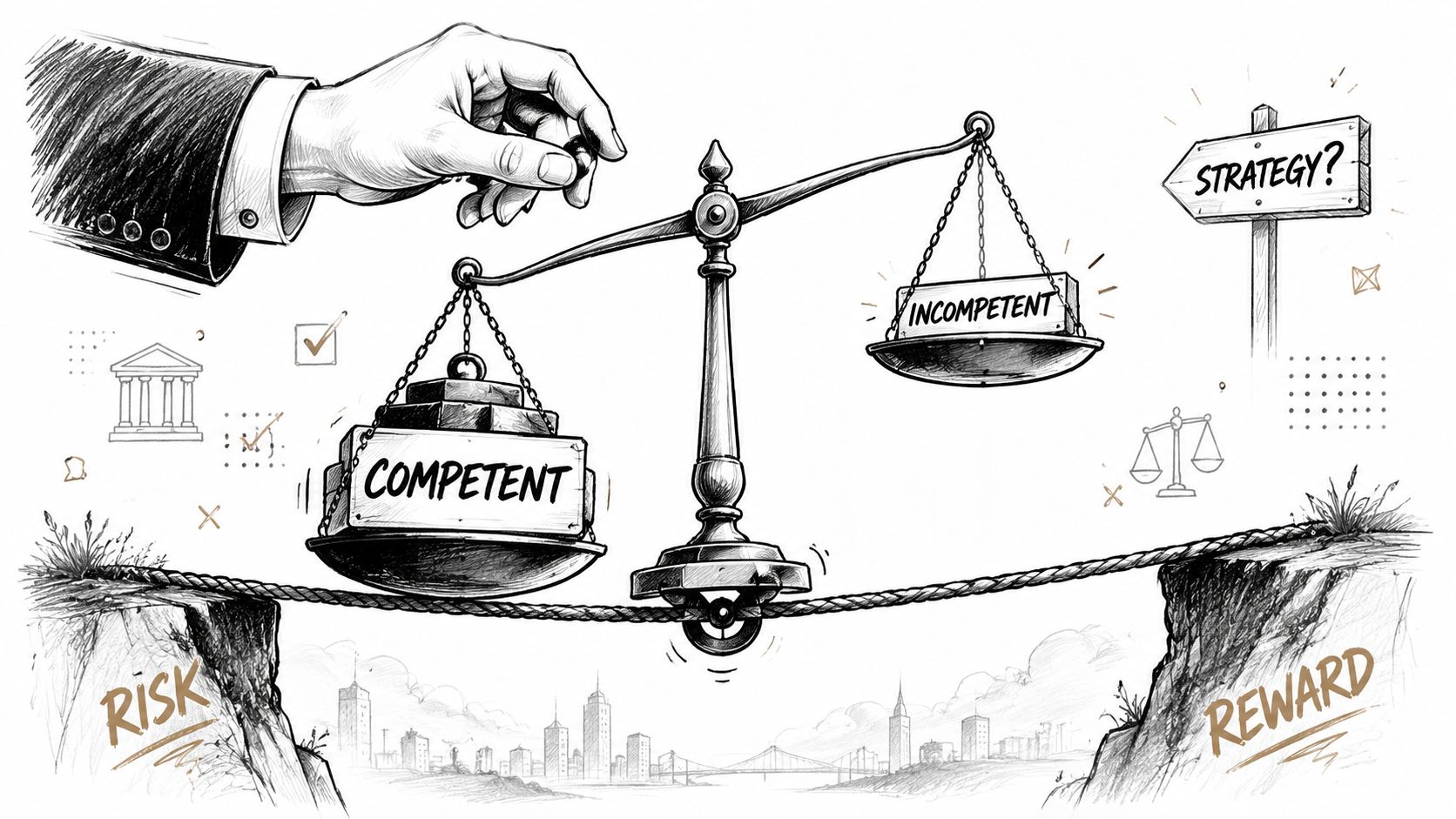
A lot of lawyers speak about incompetence as if it’s an automatic shield. It isn’t. A competency challenge can protect a vulnerable client, buy time, force treatment, and stop a reckless rush to trial. It can also hand the government a delay tool, increase confinement risk, and create a record that hurts later litigation if the defense raises it carelessly.
When raising competency helps
Use it when the client’s present functioning is plainly interfering with defense decisions. Not because the facts are ugly. Not because the family wants a softer narrative. Because the client cannot rationally participate.
Clinical patterns matter. A major APA meta-analysis covering 26,139 individuals found that 6,428 individuals, about 25%, were determined incompetent, and that defendants with a psychotic disorder were approximately eight times more likely to be found incompetent. The same analysis found that unemployed defendants were twice as likely to be found incompetent, and those with a previous psychiatric hospitalization were also twice as likely to face that finding.
That doesn’t mean psychosis equals incompetence. It means experienced court-martial attorneys and military defense lawyers should take those indicators seriously and move fast when they appear.
When it becomes a trap
If your strategy begins and ends with “get him found incompetent,” you’re playing checkers against a system playing chess.
Here are the questions to ask before pushing competency hard:
| Strategic question | Why it matters |
|---|---|
| Is the client unable to assist now, or just angry and distrustful? | Refusal to cooperate is not the same as inability. |
| Does the evidence support a genuine functional impairment? | A weak claim damages credibility with the judge. |
| Will a finding pause the case only to return the client to prosecution later? | Delay alone is not victory. |
| Is there a defense expert ready to counter the government narrative? | Without one, the 706 report may dominate the record. |
The right move is often a dual track. Protect the client’s mental health and litigate the case aggressively at the same time. Don’t let competency become a substitute for actual defense work.
Found Incompetent What Happens Next Under the UCMJ
Once the board finishes, the service member usually falls into one of three buckets. None of them should be viewed casually.
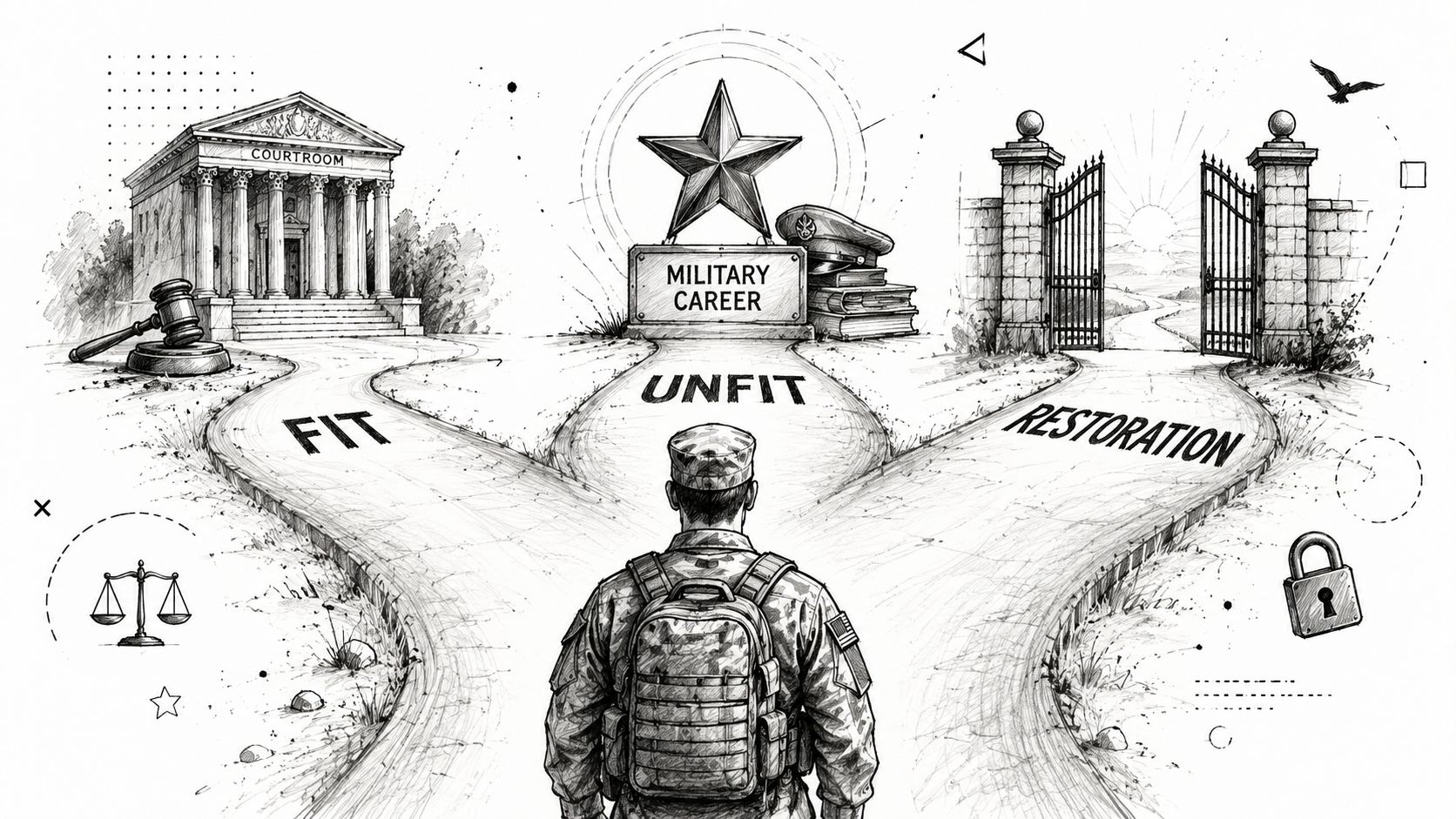
Three outcomes that matter
First outcome. Competent.
The case keeps moving. Charges don’t disappear. Command regains momentum. Trial dates, plea pressure, and adverse personnel action all remain on the table.
Second outcome. Incompetent but restorable.
This is the result many families misunderstand. It does not end the case. It pauses the case while the government tries to restore the service member to a point where prosecution can resume.
Third outcome. Incompetent and non-restorable.
This is the rarest and most consequential category. It may lead to dismissal pressure, but it can also trigger collateral consequences, including separation processing and possible civil commitment issues depending on the setting and facts.
The broader restoration picture matters. In a Connecticut Sentencing Commission analysis of 11,334 dockets from 2013 to 2024, approximately 54% of defendants were found competent after an initial evaluation, 42% were found not competent but restorable, and 4% were deemed non-restorable. Among the not competent but restorable group, 89% were referred for treatment. That tells you something important. Systems built around competency usually aim to restore people to prosecution, not permanently remove them from it.
If you need the larger procedural frame for trial litigation, review these court-martial basics. Then look at competency through the lens of where the government wants the case to end up.
What this means for your case and career
A finding of incompetence can help. It can also create a false sense of relief.
Most incompetence findings do not end criminal exposure. They redirect the case into treatment with the goal of getting the accused back in court.
That means defense counsel should be planning for the next fight immediately:
- Protect the treatment record: Statements made during mental health processes can shape later litigation.
- Press for independent review: Don’t let one government report become untouchable.
- Plan for administrative fallout: Even if trial stalls, the career damage may continue through separation or clearance action.
- Control family communication: Families often say too much to command or clinicians out of panic.
The military’s question is often, “Can we get this case moving again?” Your lawyer’s question should be, “How do we protect the client’s freedom, record, retirement, and future while this process unfolds?”
Critical Mistakes That Can Sink Your Competency Case
Service members and families can wreck strong issues by trying to be helpful, trying to be tough, or trusting the wrong people.
Mistakes that come up over and over
Talking too freely to government evaluators
You are not attending a therapy session. You are in a legal process with consequences. Be respectful, but understand the setting.Trying to fake incompetence
This blows up cases. Exaggeration is easy for trained evaluators to spot, and once credibility collapses, it’s hard to rebuild.Hiding symptoms out of pride
Good troops often minimize what’s happening because they don’t want to look weak. That can be fatal to the defense record if the client is impaired.Letting command frame the mental health story
Command will often describe serious symptoms as attitude, discipline, or refusal. Sometimes that’s wrong. Sometimes it’s self-serving.Confusing competency with insanity
This is one of the worst strategic errors in criminal defense. As explained in this discussion of incompetency to stand trial, competency concerns the defendant’s present ability to consult with counsel, while insanity concerns the defendant’s mental state at the time of the alleged offense. Mix those up and you can steer the whole case into the wrong legal theory.Waiting too long to get records
Mental health records, hospitalization history, medication changes, line-of-duty issues, and prior behavioral episodes need to be gathered early.Assuming delay helps by itself
Delay without strategy is just drift. The government keeps building its case while the client stays exposed.
Use this checklist as a gut check:
- Stop talking casually: investigators, command, and anyone collecting statements.
- Document behavior changes: family observations can matter.
- Protect consistency: mixed stories hurt.
- Separate legal theories: present competence is not insanity.
- Push for defense control: don’t surrender the psychiatric battlefield.
Why Your Appointed Lawyer Is Not Enough
Some appointed military defense counsel are smart, hardworking, and honorable. That’s true. It’s also true that in serious mental health cases, appointed counsel alone is often not enough.
Independence matters
A detailed military lawyer works inside the same institution that is prosecuting the case. Even when that lawyer fights hard, the structure matters. Access to experts can be harder. Time can be shorter. Institutional friction is real.
A seasoned civilian UCMJ lawyer brings something different. Independence. A broader trial lens. No dependence on command climate. No career penalty for pushing hard in ugly cases.
If you’re comparing options, review lawyers who focus their practice on this work. This guide to civilian court-martial defense lawyers explains what to look for. In a competency case, specialization matters more than nice branding.
A defense expert changes the battlefield
This is the part families usually miss. The government gets enormous advantage if the only psychiatric opinion in the file is the government’s opinion.
A defense-retained forensic psychiatrist or psychologist can do what the 706 process often doesn’t do well enough:
- Test legal functioning, not just diagnosis
- Review outside records that the board may have missed
- Explain why surface composure does not equal rational decision-making
- Challenge weak malingering assumptions
- Give the judge a credible alternative narrative
That expert is not there to rubber-stamp the client. A good defense expert tells the truth. But the truth needs a voice that is not built inside the government’s case structure.
If the prosecution has the first clean psychiatric narrative and the defense has nothing comparable, you are already behind.
In high-stakes cases, the difference between appointed counsel and experienced civilian defense counsel is not just experience. It’s the ability to build a parallel case file, fund the right expert, move faster, and challenge the government before its version hardens into fact.
Your Battle Plan and Immediate Next Steps
If competency is even a possible issue, speed matters. Waiting for command to “do the right thing” is not a plan.
Immediate action checklist
Stop speaking to investigators and command about the facts of the case
Don’t try to explain. Don’t try to smooth things over. Don’t trust informal conversations.Get counsel involved before any evaluation if possible
The defense needs to shape the record early, not complain about it later.Collect mental health history now
Hospitalizations, diagnoses, medications, prior evaluations, family observations, and sudden behavior changes all matter.Ask whether a defense psychiatric evaluation is needed immediately
In many cases, the answer is yes.Prepare for both tracks
You may be fighting over competency while also preparing for trial, separation, confinement issues, or a negotiated outcome.
Frequently asked questions
Can I refuse a 706 Board
Usually, you can object and your lawyer can litigate scope, fairness, and timing, but you should assume the military can push forward with a competency process if the issue is properly raised. The central question is not refusal in the abstract. A primary concern is how to protect yourself before, during, and after the evaluation.
What are my rights during the evaluation
You still have rights, but this is a dangerous setting. You need legal advice specific to what can be disclosed, what the evaluator is assessing, and how the findings may be used. Don’t improvise.
How long will a competency hold last
There is no safe one-size-fits-all answer. Some cases move fast. Others stall while the government pursues restoration and related administrative action. Delay can become its own punishment if the defense is not pushing every day.
Will a finding of incompetence make the charges disappear
Usually not. In many cases, it pauses prosecution while the system tries to restore the accused and restart the case.
Do I need a lawyer immediately
Yes. If you are under investigation, pending court-martial, or facing a 706 issue, this is the moment to act. Not after the report. Not after command has circulated its version. Now.
If you are under investigation, facing a court-martial, or watching a loved one spiral while the military keeps pushing the case forward, act now. Your career is on the line. Your freedom may be on the line. Your future benefits, reputation, and discharge status are all exposed.
Don’t wait for command to be fair. Don’t assume the government doctor will tell your side of the story. Don’t let a bad competency record get built before the defense shows up ready to fight.
Start by finding and speaking with experienced civilian military defense lawyers. Then choose counsel who knows how to challenge a 706 Board, retain an independent forensic expert, and protect the service member before the system locks in its narrative. Early action wins cases. Delay hands the government an advantage.