
You're at work when the message arrives: report to the command office, contact an investigator, or meet with counsel. Maybe CID, NCIS, OSI, or CGIS has asked for an interview. Maybe your commander has told you charges are being considered. Until that moment, the investigation felt distant. Now your freedom, career, reputation, security clearance, and family's stability may depend on decisions made under pressure.
A court-martial is a criminal trial under the Uniform Code of Military Justice, not an administrative counseling session. Depending on the offense and sentence, the consequences can include confinement, a punitive discharge, forfeiture of pay, loss of rank, a criminal conviction, and collateral consequences that follow you into civilian life. Certain offenses can also create sex-offender-registration issues. The government has investigators, prosecutors, command authority, and time. You need a deliberate defense strategy before you give them evidence they don't already have.
This guide explains what happens in a court martial, from investigation and referral through arraignment, trial, sentencing, appellate review, and post-conviction remedies. The hidden decision points matter more than courtroom drama. Early action, disciplined communication, evidence preservation, and experienced counsel can determine whether the government's case remains vulnerable or becomes much harder to defeat.
Table of Contents
- The Moment Everything Changes
- Understanding the Three Types of Courts-Martial
- Inside the Courtroom Trial Process
- Critical Mistakes That Destroy Military Careers
- Why Civilian Defense Counsel Changes Everything
- What Happens After the Verdict
- Frequently Asked Questions About Courts-Martial
The Moment Everything Changes
The first hidden decision point arrives before you know whether you are a target: how you respond to a routine-sounding request from an investigator, first sergeant, or military police officer. “We just need to ask you a few questions” can be the opening move in an evidence-gathering process, not a harmless conversation.
If you are the subject or a potential accused, assume investigators may already have interviewed witnesses, collected digital evidence, reviewed messages, obtained search authority, or coordinated with prosecutors. Their assignment is to gather evidence. They are not responsible for protecting your career or deciding whether your explanation seems fair.
Practical rule: If investigators want to question you about suspected misconduct, do not try to explain or clear things up before speaking with counsel.
The Uniform Code of Military Justice created a unified military justice system after Congress approved it on May 5, 1950, and it took effect on May 31, 1951. The reform provided an independent Article I civilian appellate court and rights to counsel at trial and on appeal. Before then, separate Army and Navy systems operated, and legally qualified counsel or judges were not guaranteed in the way modern practice expects. The historical outline of the UCMJ's creation and reforms shows why a court-martial is a formal criminal proceeding, not an informal command meeting.
Military justice remains active. Canada reported 46 courts martial in 2023–24 and 32 in 2024–25, including 9 contested trials. U.S. service reports also show recurring litigation, including 199 Navy courts-martial in FY23, 170 in FY25, and 461 Army referred cases in FY24, with 169 general courts-martial tried and 93 convictions. Official military justice reporting confirms the practical point: treat the process as real from the first contact.
Your first moves matter. Do not delete messages, contact the complainant, coordinate accounts with friends, or assume a strong service record will shield you. Preserve evidence, invoke your rights when appropriate, and get counsel before investigators and command memorialize their version of events.
Understanding the Three Types of Courts-Martial
The label matters because the forum controls procedure, available punishment, and the decision-maker. A summary court-martial handles less serious allegations through a simplified process. A special court-martial is a more substantial criminal proceeding. A general court-martial handles the most serious charges and carries the greatest exposure.
Don't treat those labels as harmless classifications. The level of court-martial affects whether a military judge or members decide the case, what punishment is available, and how aggressively the government may litigate. The available punishment also depends on the charged offense and the governing version of the Manual for Courts-Martial, so counsel must analyze the actual charge sheet rather than rely on a generic online description.
The pretrial checkpoints
The case usually passes through several gates before trial:
-
Investigation and charging. Law enforcement and command gather information, then charges and specifications are drafted. A specification is the factual statement describing the alleged misconduct.
-
Legal review and referral decision. For a general court-martial, Article 32 requires a preliminary hearing process unless waived, and the convening authority must receive staff judge advocate advice before referring charges. The Manual for Courts-Martial materials describing Article 32 and referral review identify the legal and hearing checkpoints that precede a general court-martial.
-
Preliminary hearing. Article 32 isn't a miniature trial, but it can expose weaknesses in witness accounts, identify missing evidence, and create useful testimony for later litigation. A defense lawyer should use it to test the government's theory, not merely attend it.
-
Referral. The convening authority sends the charges to a particular court-martial. Referral is a serious escalation, but it isn't a conviction. The defense still has opportunities to challenge evidence, jurisdiction, charging defects, and trial procedures.
-
Arraignment and active litigation. Under the current Manual, arraignment is the formal session where charges and specifications are read and the accused is called upon to plead. Once arraignment occurs, additional charges generally can't be referred to that same court-martial together with the charges already referred. The 2023 Manual for Courts-Martial.pdf) sets out that formal consequence.
The government must clear those procedural stages, but don't mistake procedure for protection. Each stage also gives prosecutors opportunities to refine their case. Defense counsel should be involved before referral whenever possible, because early motions, witness work, and evidence preservation can change the case's direction.
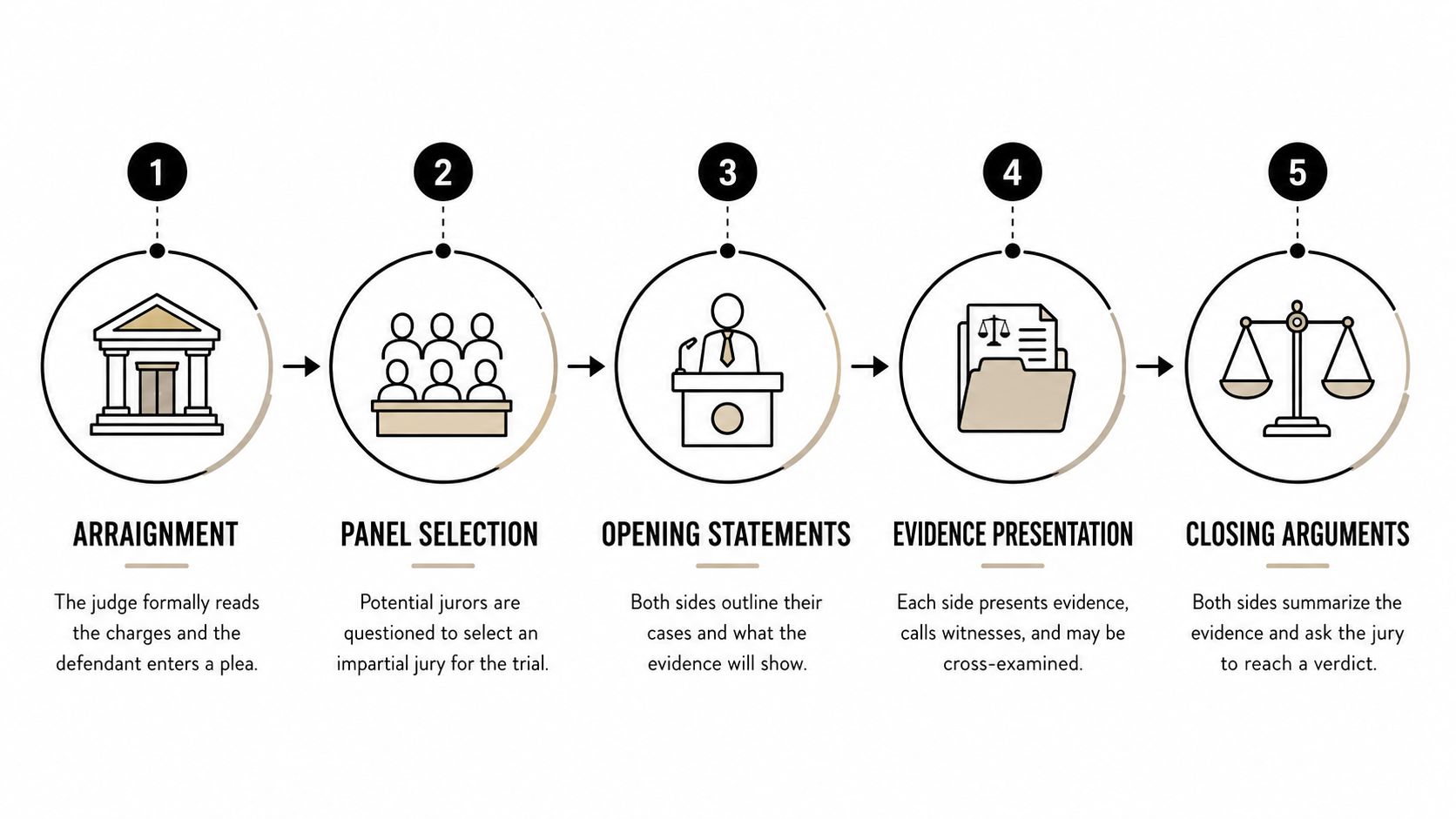
The court-martial process also varies across military systems. Canada's official defense counsel guidance describes a progression through preliminary proceedings, trial, sentencing after a guilty finding, and possible appeal-related custody review. That practical court-martial process guide reinforces a point service members often miss: a court-martial isn't one hearing. It's a sequence of decisions, and each decision affects the next.
Inside the Courtroom Trial Process
Arraignment formally places the charges before the court. The accused appears with counsel, the charges and specifications are addressed, and pleas may be entered. Don't make a plea decision casually. The right response depends on discovery, admissibility issues, negotiated resolution discussions, and whether the government can prove every element.
A contested trial then moves through findings litigation. The prosecution presents its case first. Defense counsel cross-examines government witnesses, challenges exhibits, and tests whether each element has been proved. The defense may present evidence, but it isn't required to prove innocence. Rebuttal evidence may follow, and both sides deliver closing arguments before the finder of fact announces findings.
The burden and the decision-maker
The prosecution must prove guilt beyond a reasonable doubt. In the U.S. system, military evidentiary rules are patterned after the Federal Rules of Evidence, which means relevance, hearsay, authentication, privilege, and reliability can decide whether the court hears critical material at all. The Veterans and Wounded Americans Coalition's military justice explanation describes the burden and the sentencing proof mechanics that make evidence strategy central.
In a general or special court-martial decided by members, conviction generally requires the concurrence of at least three-fourths of the members present, not a simple majority. Findings on each charge and specification are taken by secret written ballot, and all members present vote. A military judge alone or an accepted guilty plea follows a different path. The 2023 Manual's Article 52 provisions%20(2023_09_15).pdf?ver=DYv_dgnVlSTjgwUwpO2piQ==) explains those voting rules.
That distinction affects trial strategy. A panel may respond differently to credibility disputes, emotional testimony, technical evidence, or command context than a military judge. Counsel must evaluate the forum, the members, the judge, the evidence, and the theory of the case together.
Findings are not sentencing
If the court finds guilt, the case enters a separate sentencing hearing. That separation is strategically important. The findings phase asks whether the accused committed the charged offense. Sentencing asks what punishment is lawful and appropriate in light of aggravation, mitigation, service history, context, and rehabilitation potential.
A guilty plea changes the sequence. If the military judge accepts the plea, the judge may enter a guilty finding immediately without a member vote. The 2024 Manual explains that the finding remains the court's finding unless the plea is withdrawn before sentence is announced. In a contested case, sentencing follows findings, and the same forum that decided guilt then determines punishment. The 2024 Manual supplemental material describes that guilty-plea structure.
Courtroom conduct matters, too. Dress appropriately, follow counsel's instructions, and avoid turning appearance into another credibility problem. For general guidance on attire recommendations for legal hearings, use a practical courtroom-attire resource, then confirm expectations with your defense team.
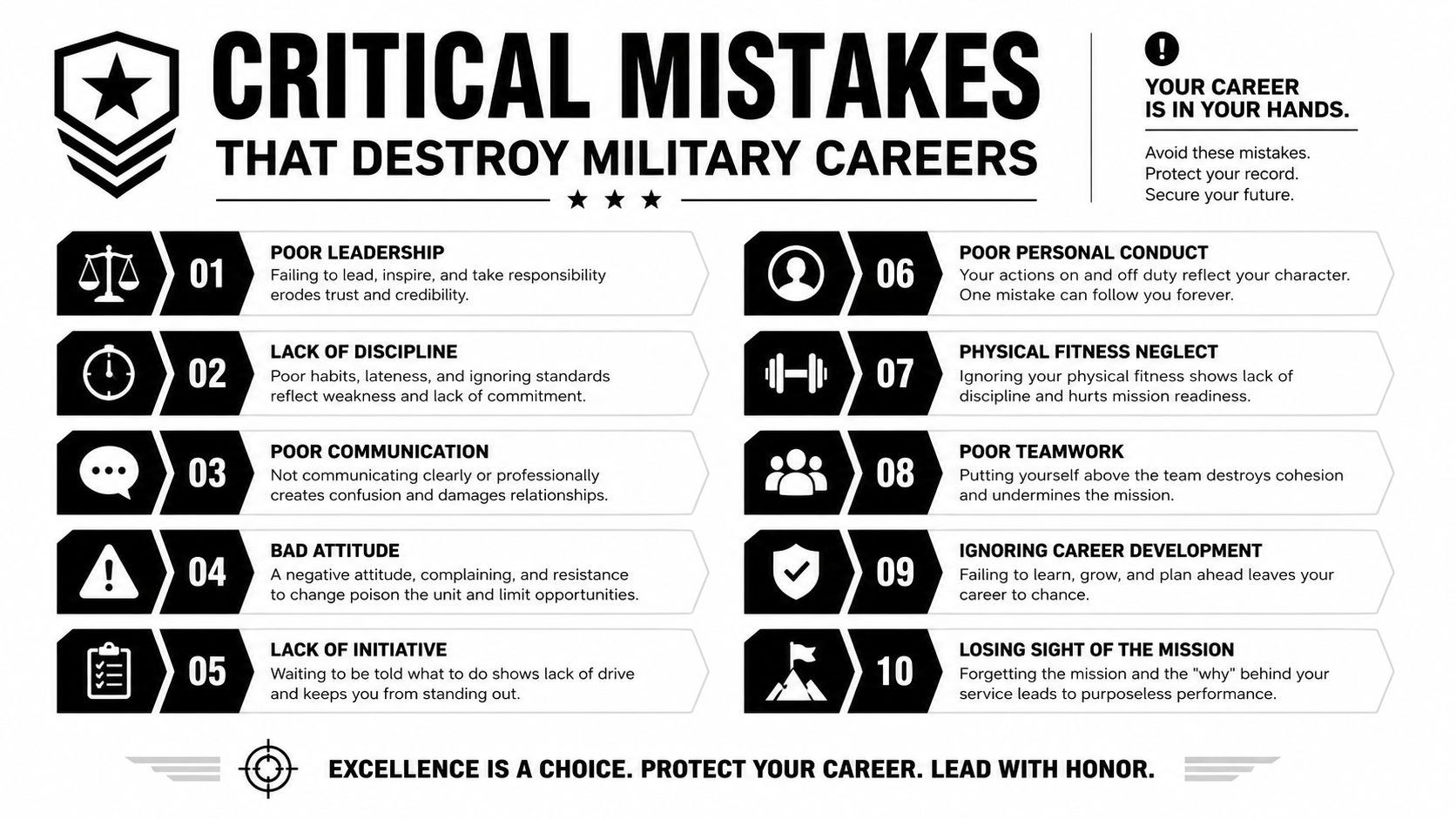
Critical Mistakes That Destroy Military Careers
Most damaged defenses don't collapse because the accused lacked a defense. They collapse because the accused gave the government unnecessary evidence, contaminated witnesses, destroyed useful material, or waited until strategic options had narrowed.
Talking before getting advice
If CID, NCIS, OSI, or CGIS asks questions, don't assume cooperation will make you look innocent. Investigators document inconsistencies, omissions, emotional reactions, and partial admissions. A truthful explanation can still become damaging when given without context or legal preparation.
Learn your Article 31 rights under the UCMJ before answering questions about suspected misconduct. Invoke your rights clearly and respectfully, then contact counsel.
Trusting command to “handle it”
Your chain of command may care about the unit, mission, and fairness. It doesn't represent you. Commanders decide administrative and disciplinary issues within their authority, while prosecutors build cases for the government. Keep communications professional, but don't disclose privileged defense strategy to leadership or informal advisors.
Waiting for “real charges”
An investigation is already a legal event. Waiting for referral can cost access to witnesses, phone data, location records, and surveillance material. It can also allow a single untested narrative to spread through the command.
Assuming there's no evidence
You may not know what investigators possess. Evidence can include messages, cloud backups, access logs, witness accounts, medical records, photographs, and statements from people you thought were friends. Never delete or alter anything. Preserve it and let counsel decide what matters.
Posting or discussing the case
Social media posts can create admissions, expose relationships, or suggest witness influence. Friends and family may become witnesses if you discuss facts with them. Don't ask anyone to change a statement, don't coordinate accounts, and don't contact an alleged victim.
Consenting to searches without advice
You can be respectful without volunteering consent to a search of your phone, room, vehicle, or residence. Don't physically interfere with a search, but ask for counsel and avoid making statements about the contents. A defense lawyer can later examine the authority, scope, execution, and collection process.
The safest early posture is simple: preserve evidence, stop discussing the facts, and put every substantive decision through counsel.
Why Civilian Defense Counsel Changes Everything
Appointed military defense counsel can be capable, dedicated lawyers. They also work inside a system with demanding caseloads, rotating assignments, administrative duties, and institutional limits. In a serious court-martial, you should ask a harder question than whether appointed counsel is competent: does the defense have enough focused time, specialized experience, and independence for the stakes?
Civilian military defense lawyers offer a different structure. A civilian lawyer isn't assigned to your installation's defense office and doesn't rotate away because of a military posting. Counsel can devote concentrated time to witness interviews, digital evidence, expert coordination, motion practice, and trial preparation. That independence also gives the defense a firm advocate outside the command environment.
A civilian lawyer doesn't automatically replace appointed counsel. Many service members use both. The military attorney brings system familiarity and access to military processes, while civilian counsel may provide deep court-martial trial experience, strategic continuity, and an independent second analysis. The arrangement must be coordinated carefully so the defense presents one coherent strategy.
What to evaluate before hiring
Ask direct questions:
- Court-martial experience: How many contested trials has the lawyer handled, and in which services?
- Serious-charge experience: Has counsel defended allegations involving sexual offenses, violence, fraud, controlled substances, or obstruction?
- Trial role: Did the lawyer lead litigation, conduct cross-examination, argue motions, and handle sentencing?
- Geographic reach: Can counsel represent clients across branches, components, and overseas locations?
- Communication: Who answers urgent questions, and how quickly?
- Post-trial capability: Can the team handle clemency, appellate issues, discharge consequences, or records remedies?
Read this guide to court-martial defense lawyers, then interview more than one lawyer before choosing. Credentials matter, but fit matters too. You need a lawyer who can explain the theory of defense, identify immediate evidence risks, and tell you what not to do.
What Happens After the Verdict
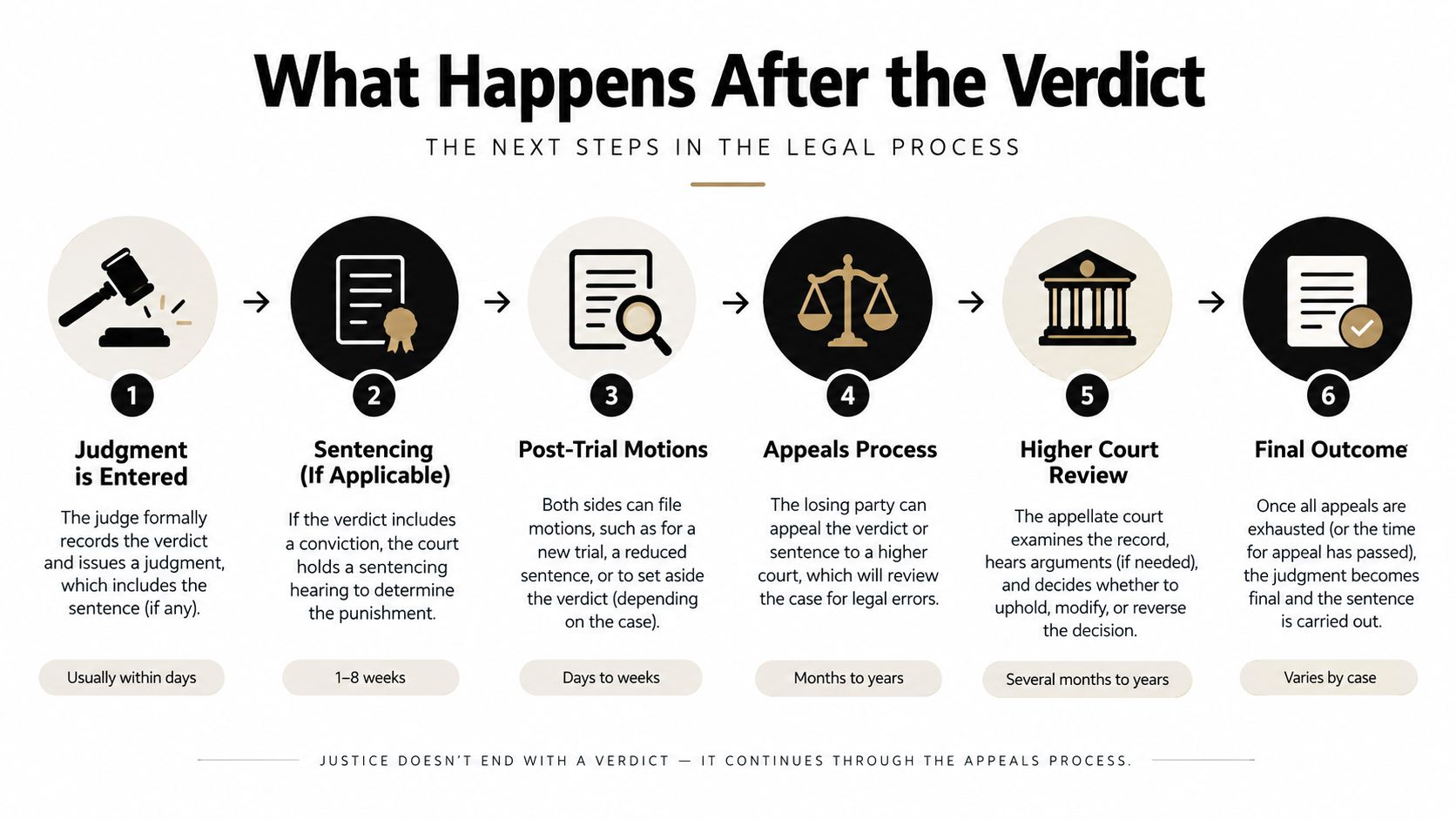
The verdict creates a new set of hidden decision points. The first is often missed: sentencing is a separate trial, where the government may introduce new aggravation evidence and the defense must build a record that limits the sentence. Treat that hearing as a second fight, not a formality.
Both sides may present admissible evidence, including witness testimony, aggravation, mitigation, and information relevant to punishment. If sentencing facts are disputed, the government may have to prove them beyond a reasonable doubt. The official military justice explanation of sentencing proof explains why the defense must challenge damaging facts and present credible mitigation before the members or military judge decide punishment.
Punishment and immediate consequences
The punishment list is only the starting point. Confinement can remove you from your unit and interrupt your career. A punitive discharge, such as a bad-conduct or dishonorable discharge when authorized and imposed, can affect civilian plans long after release. Forfeitures can reduce pay or allowances, while reduction in rank lowers your pay grade and signals a serious career setback. Other lawful restrictions may affect service status and future opportunities.
The hidden consequence is how the sentence interacts with your service record, security clearance, civilian employment plans, professional licensing, housing, firearms eligibility, and veterans' benefits. A sentence that avoids confinement may still leave discharge consequences requiring separate analysis. Sex-offense convictions can also create registration obligations. Review the effect on your specific goals before agreeing to a plea or accepting a sentencing strategy. Guidance on other-than-honorable discharge benefits can help identify benefits issues, but counsel must assess your actual disposition and later legal determinations.
Review and later remedies
After sentencing, the record enters post-trial review. Depending on the sentence and applicable law, review may involve the service Court of Criminal Appeals, the Court of Appeals for the Armed Forces, and a possible petition to the U.S. Supreme Court. Appellate courts examine legal and procedural errors, including preserved objections and defects in the record. They do not reconsider whether the result feels unfair.
Post-trial advocacy may address clemency, sentence relief, discharge consequences, and later correction or upgrade options. Do not wait until confinement begins to ask about appeals. Preserve objections, protect the record, and obtain post-trial advice immediately. Some issues become harder to raise after the trial record closes.
Frequently Asked Questions About Courts-Martial
Can I refuse to talk to CID, NCIS, OSI, or CGIS?
You should not answer questions about suspected misconduct before consulting counsel. Clearly invoke your rights, remain respectful, and don't guess, explain, or volunteer a statement.
What happens at an Article 32 hearing?
An Article 32 preliminary hearing examines the basis for charges before a general court-martial referral. Counsel can test witness accounts, identify evidence problems, and preserve useful issues, but it isn't the trial itself.
Will I go to jail?
You may face confinement if convicted and sentenced to it. The risk depends on the charges, forum, evidence, plea or trial strategy, and sentencing presentation.
How long does a court-martial take?
There isn't one reliable timeline. Investigations, discovery, motions, witness availability, command decisions, and appellate review can make the process lengthy.
Will a conviction appear on a civilian background check?
It can create a criminal record and collateral consequences outside the military. The exact effect depends on the offense, disposition, jurisdiction, and the background-check system.
When should I hire a civilian lawyer?
Immediately after learning you're under investigation or facing charges. Early counsel can protect communications, preserve evidence, prepare for Article 32, and prevent avoidable admissions.
If you're under investigation, have been notified of charges, or face an Article 32 hearing, contact an experienced civilian UCMJ lawyer now. Don't speak to investigators, sign substantive documents, consent to searches, or discuss the facts with potential witnesses before receiving advice. Your freedom, military career, discharge, benefits, and civilian future are at stake, and the government has already started building its case.