You’re probably holding a sheet of paper that looks routine and feels manageable. That’s the trap. In the Air Force, AFI 36-2907, now DAFI 36-2907, is where command turns a “small” counseling into a paper trail that can hit your promotion, your clearance, your retraining, and your future separation fight.
If a supervisor, first sergeant, or commander has handed you an LOC, LOA, or LOR, don’t kid yourself. They’re not just correcting behavior. They’re building a record. And once that record starts to harden, command can use it later as leverage in an Article 15, a control roster action, a referral report, or a discharge package. The next 72 hours matter more than the last 72 months of good service.
Table of Contents
- When a Letter Feels Small but Isn’t
- What AFI 36-2907 Actually Governs
- The Categories of Action Command Can Use
- Deadlines, Routing, and Procedural Edge Cases
- How AFI 36-2907 Interacts with UCMJ and Article 15
- What to Do in the First Seven Days
- Why Civilian Military Defense Counsel Makes a Difference
- Appeals, Corrections, and Cleaning the Record
When a Letter Feels Small but Isn’t
A young Airman gets called into the office and handed a Letter of Counseling. The supervisor says it’s “just paperwork,” tells him to sign, and warns him not to make a scene. He’s already nervous, so he signs, hoping this goes away if he keeps his head down.
That’s how careers get pinned to the wall.
A signature usually doesn’t mean you agree. It often means you received the document. But once the paper is in motion, command can file it, route it, and use it as proof that you were warned. That matters because administrative paperwork often becomes the backbone of a later promotion denial, referral report, control roster placement, or separation packet. The Air Force’s adverse-action system is built to create a record, and the record is the weapon.
Practical rule: if the document names dates, incidents, or alleged misconduct, treat it like evidence. It is evidence.
The biggest mistake service members make is pretending the word “administrative” means “safe.” It doesn’t. AFI 36-2907 is designed to standardize adverse administrative actions, which means command gets a cleaner path to document misconduct and preserve it for later use. The key question is not whether the letter feels minor. The question is whether it will still matter when a promotion board, commander, or separation authority reviews your file later.
If you’re staring at an LOC, LOA, or LOR right now, stop thinking about comfort and start thinking about containment. You need a copy, a deadline, and a rebuttal strategy. If the paperwork is dirty, incomplete, or unsupported, that weakness has to be exposed immediately. A strong rebuttal can keep the damage local, limit the filing, or set up a later correction fight. A weak one can make the problem permanent.
A strong rebuttal starts with the right framework, and this guide on writing strong GOMOR rebuttals shows the kind of disciplined response command takes seriously.
What AFI 36-2907 Actually Governs
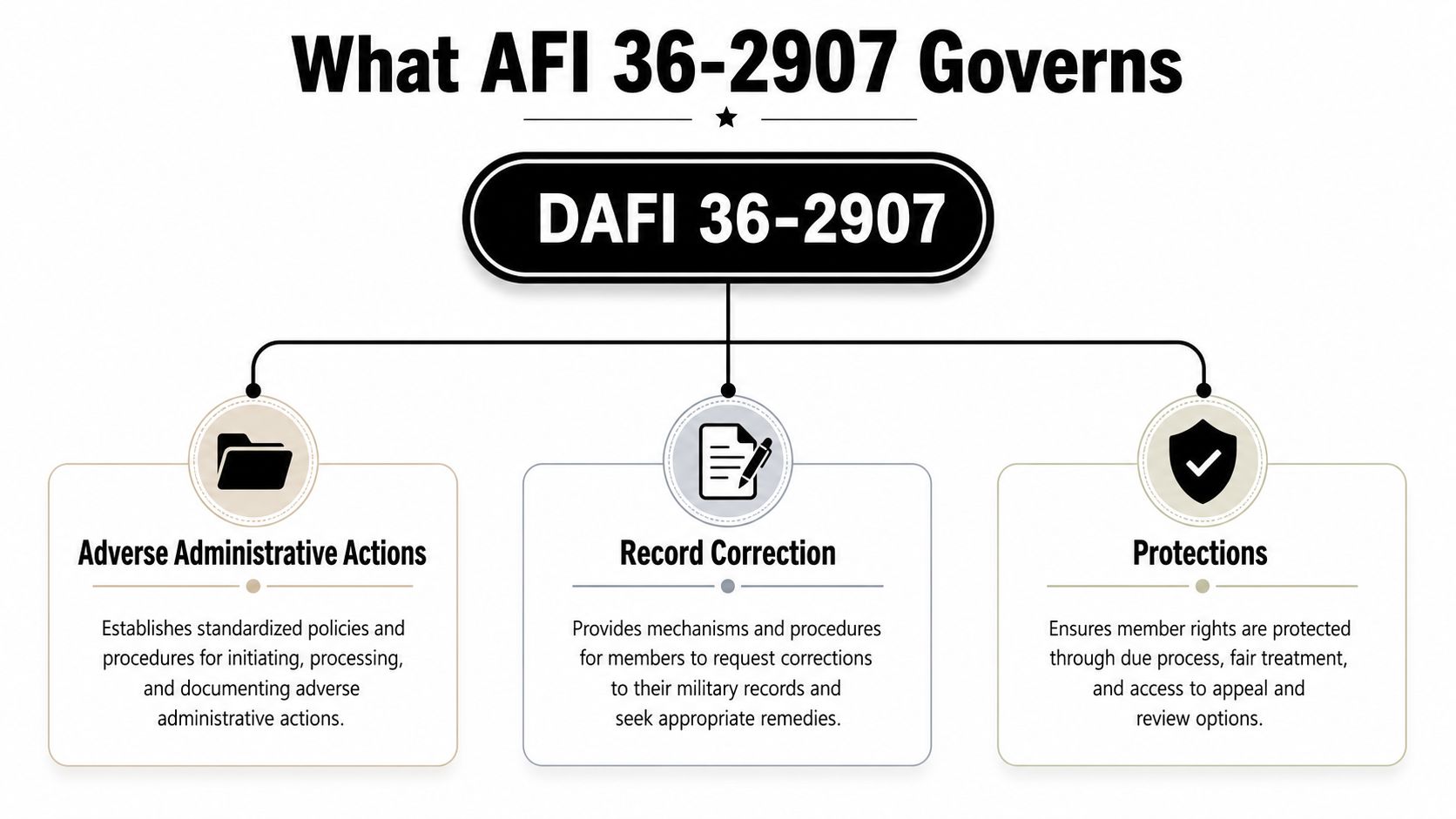
DAFI 36-2907 is the Air Force instruction that governs adverse administrative actions. Its job is simple: standardize the policies and procedures commanders use when they impose non-judicial administrative measures against Air Force members. The source material makes the point clearly, this is a procedural control layer. It tells command when an adverse action is permissible, how it should be documented, and how it fits into the broader personnel system. DAFI 36-2907 procedural overview
That matters because this regulation is not the same thing as the UCMJ. UCMJ action is criminal or quasi-criminal discipline. AFI 36-2907 is the paper trail, the warning system, and the administrative pressure point. Command uses it to show notice, escalate consequences, and preserve a record that later decision-makers can rely on.
Who it binds
It binds commanders, first sergeants, supervisors, and members. Command has to document adverse action in a way that fits the Air Force personnel system. Members have to respond fast, because silence gets treated as a missed opportunity, not a victory.
The key idea is this. AFI 36-2907 is not there to protect you from command. It is there to control command’s paperwork and make the action reviewable later. That sounds neutral, but it usually helps the government more than the member unless you push back with evidence and timing.
Why the distinction matters
A lot of Airmen think, “If this isn’t court-martial, I’m fine.” Wrong. Administrative action can still wreck your career without ever putting you in a courtroom. It can be used to justify a later Article 15, support a pattern-of-misconduct theory, or stack the deck in a separation case. The instruction exists to make that process orderly, not harmless.
If you want a practical comparison with nonjudicial punishment, the breakdown at what an NJP is in the military is worth reading after you finish this.
The Categories of Action Command Can Use
Command doesn’t just have one blunt tool under AFI 36-2907. It has a ladder. The lower rungs look mild, but each step creates more influence for the next one.
The lower end of the ladder
A Letter of Counseling usually comes first. It is meant to put you on notice. That doesn’t make it trivial. A well-drafted LOC can become the first written proof that command says you knew the issue and kept going anyway. A Letter of Admonishment is more serious. It says the command believes your conduct crossed a harder line and deserved stronger written correction.
A Letter of Reprimand is the heavy hitter. It is not a slap on the wrist. It is a formal rebuke, and in Air Force life that usually means real career pressure. It can feed a Unfavorable Information File, trigger a Control Roster action, and support a referral report or later separation package. A letter that seems local today can become visible to the people deciding your future tomorrow.
What command is really doing
Command is rarely just correcting a single incident. It is building a file that shows notice, response, recurrence, and escalation. That file helps them justify harsher administrative action later if they decide your conduct is a pattern. It also helps them say they followed a process, which makes it harder for you to unwind the result after the fact.
| Element | AFI 36-2907 Administrative | UCMJ / Article 15 |
|---|---|---|
| Primary purpose | Written correction and record-building | Punishment or formal discipline |
| Immediate effect | Notice, filing, career pressure | Punitive consequences |
| Use later | Can support separation or further action | Can be part of a broader misconduct case |
| Member response | Rebuttal, file challenge, mitigation | Rights advisement, election options, defense strategy |
A letter that stays local can still be painful. A letter that lands in the wrong file can follow you for years. The question is never “Is this just paperwork?” The question is “What file is command trying to build, and how do I stop it from becoming permanent?”
Deadlines, Routing, and Procedural Edge Cases
The Air Force loves paperwork until the paperwork works against it. Then timing suddenly matters.
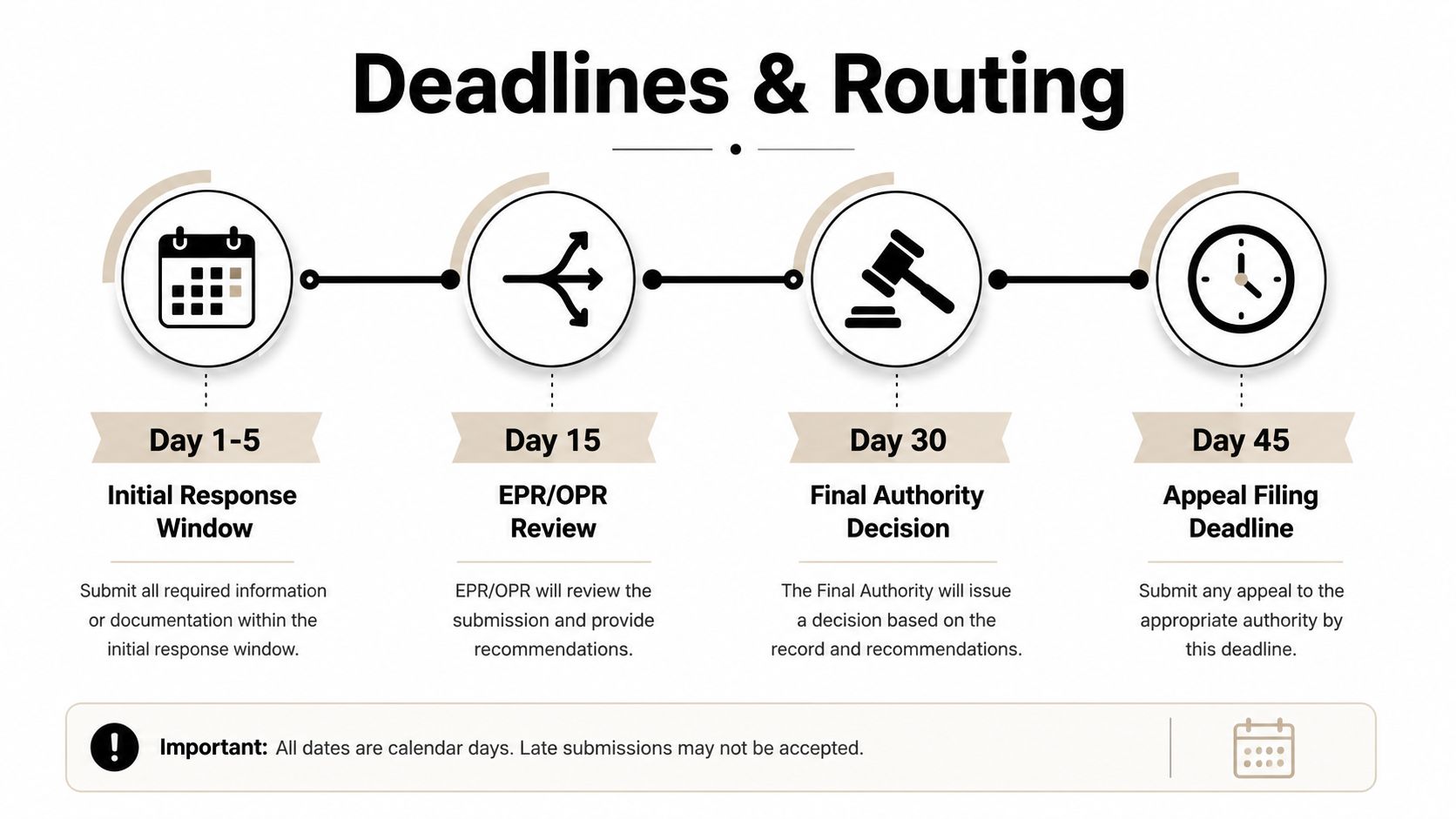
Publicly available template guidance tied to AFI 36-2907 shows a fifth indorsement due within 5 duty days for active components or 45 calendar days for ARC, and routing to the immediate commander within 3 duty days after acknowledgment. Those aren’t just clerical niceties. They’re the kind of deadlines that can expose sloppy command processing if the paperwork drifts off course. Template guidance with routing deadlines
What a missed deadline can mean
A missed deadline does not automatically kill the action. Don’t assume that. In practice, it can become an appeal issue, an argument for harmless administrative error, or in a stronger case, a reason to challenge the validity of the action itself. The result depends on the defect, the prejudice, and how badly the command botched the record.
That’s why you don’t just read the letter. You check the dates. You check the routing. You check who signed, when they signed, and whether the endorsement chain makes sense. If the command blew a deadline, that is ammunition. If you miss the chance to document it, you hand that ammunition back.
The best defense is a clean timeline. The worst defense is assuming command followed the rules because the paper looks official.
Edge cases counsel looks for
- Late routing: paperwork that sat on a desk without explanation.
- Broken acknowledgment trail: no clear proof you were properly served.
- Wrong authority: the wrong person issuing or endorsing the action.
- Mixed record types: a letter pushed into the wrong personnel channel.
- Repair by after-the-fact paperwork: command trying to cure a bad process after the fact.
None of this is academic. If command can’t keep its own timeline straight, you may have a real opening to narrow the action or attack how it gets used later. If the file is already incomplete, you need that issue documented immediately, before the story gets rewritten as if the process was perfect.
How AFI 36-2907 Interacts with UCMJ and Article 15
Administrative action and UCMJ action are different lanes, but they run beside each other all the time. That’s the part service members miss until it’s too late.
An LOC today can become proof that command already gave you notice. An LOR can help the government show a pattern or justify a stronger response. A control roster or referral report can turn a “paper only” matter into a career event. The Air Force does not treat each piece in isolation. It stacks them.
The real risk of “just taking it”
If you swallow the administrative action and say nothing, you may think you’re avoiding conflict. You’re not. You’re helping the government preserve a cleaner record. That’s especially dangerous when the paper trail will later be paired with an Article 15, a separation proposal, or a court-martial theory.
| Element | AFI 36-2907 Administrative | UCMJ / Article 15 |
|---|---|---|
| Command’s goal | Document and pressure | Punish or formally discipline |
| Member’s immediate choice | Rebut, challenge, mitigate | Accept, demand hearing options, defend |
| Later use | Can support future adverse action | Can rely on prior paperwork as context |
| Career impact | Filing, visibility, personnel damage | Punitive record and broader consequences |
The smart move is to treat the administrative action as part of the full case, not a side issue. If command is using it to tee up future punishment, you need to respond like the stakes are already higher.
Why the overlap matters
A commander who is not ready for UCMJ may still use paperwork to build momentum. That’s often how a serious case starts. It gives the government a chronology, a paper witness, and an argument that you had been warned. That’s why this stage is the time to fight over facts, wording, filing location, and whether the letter should exist at all.
What to Do in the First Seven Days
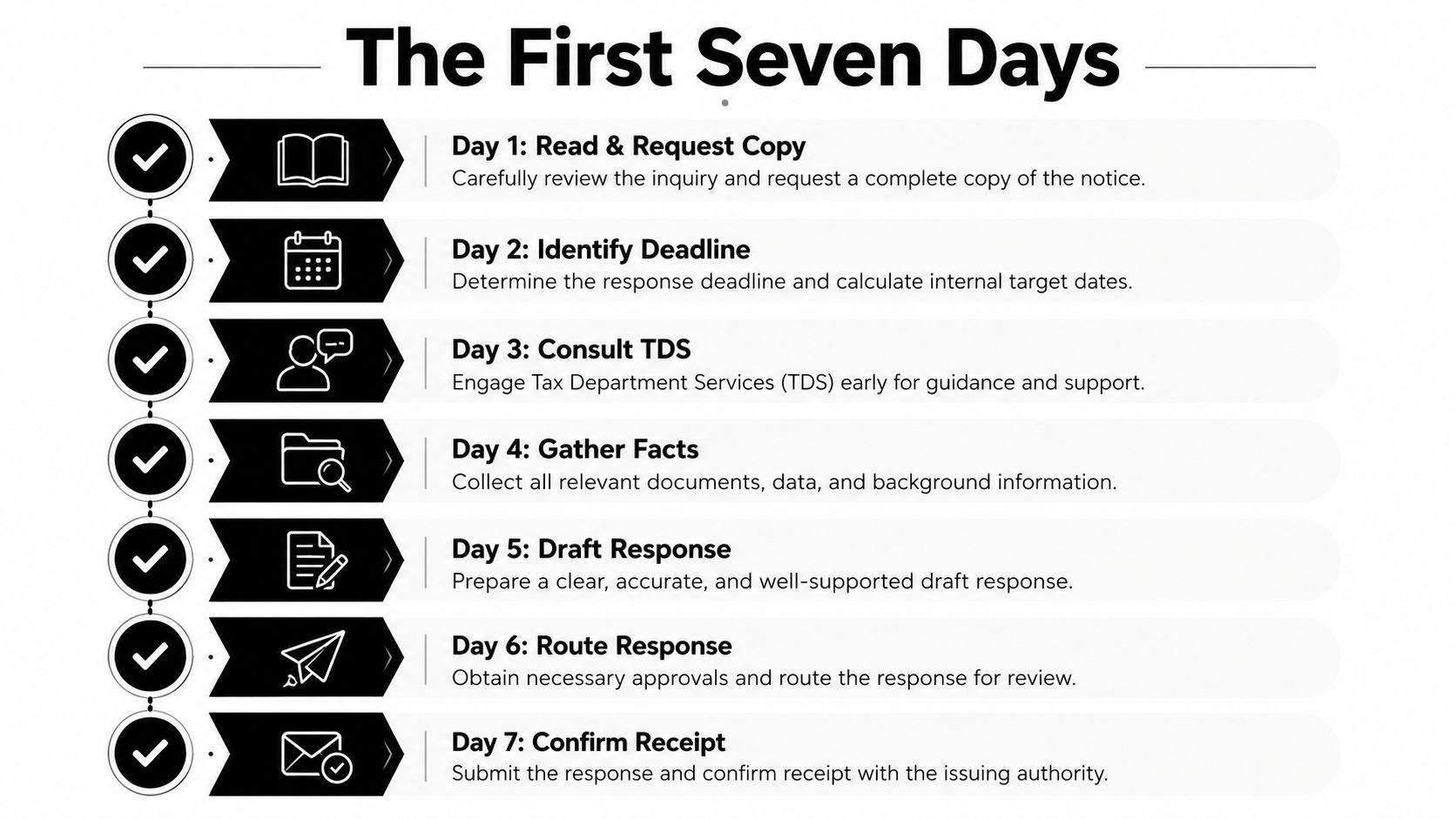
The first week is not the time to “see how it plays out.” That’s how members get buried. Your job is to freeze the damage, force the process onto the record, and stop talking until counsel tells you to talk.
Day 1
Read the document carefully. Get a copy. Don’t sign anything under pressure if you haven’t had a chance to understand what you’re being handed. Then request a military defense lawyer immediately. If the letter references misconduct, dates, witnesses, or prior warnings, assume the file can grow.
Day 2
Look for the rebuttal window and prepare a written response. The best responses are specific. They identify what happened, what didn’t happen, and what the document leaves out. They don’t whine. They attack bad facts, bad assumptions, and missing context.
Day 3
Stop informal conversations from turning into admissions. If command, security forces, or an investigator wants a voluntary interview, slow it down. Article 31 rights issues often arise when members talk first and ask legal questions later, and you don’t want to be the person who filled in the gaps for the government.
Days 4 through 7
Build the defense file.
- Gather documents: schedules, emails, messages, duty logs, training records, and anything that fixes the timeline.
- Identify witnesses: names matter, but credibility matters more.
- Preserve context: screenshots and records need to be kept before they disappear.
- Retain civilian counsel: if this has any real career risk, get a civilian military defense lawyer involved now.
- Stop voluntary interviews: no casual meetings, no “just clearing things up,” no unscripted explanations.
The most common mistakes in this window are brutal and predictable:
- Signing blindly: assuming a signature means agreement or harmless receipt.
- Writing an emotional rebuttal: anger makes the file worse.
- Talking too much: giving command extra admissions.
- Waiting for the squadron to be fair: command is not your defense team.
- Ignoring deadlines: once they pass, your influence drops fast.
For a hard look at interview rights and why silence matters, the article on Article 31 of the UCMJ is the right companion piece.
If you want a quick visual on the sequence, watch this:
Why Civilian Military Defense Counsel Makes a Difference
The free lawyer option is real, and in some cases it’s enough. But when command is building an adverse record under AFI 36-2907, a retained civilian military defense lawyer gives you something the chain of command can’t.
Independence matters
Area Defense Counsel is inside the military legal-defense system. That can help, but it also means the office sits within the same broad military structure the commander is using against you. A civilian lawyer is outside that chain. That independence changes the dynamic fast. Command knows the rebuttal is not coming from a lawyer who reports through the same institution applying pressure.
Trial depth matters
Administrative actions often look simple because the paper is short. They aren’t. A lawyer who spends real time in court-martial defense understands how these small pieces become future exhibits, notice arguments, credibility fights, and separation predicates. That’s where experience counts. You want someone who knows how command builds a case, not just how to answer the letter politely.
Strategic pressure matters
A strong civilian defense counsel does more than draft a response. They control the pace, preserve objections, and force command to deal with the weaknesses in its own paperwork. They also know when not to overexplain. Bad rebuttals give command free admissions. Good rebuttals box the issue in.
If the letter is likely to affect your file, your career, or your future separation fight, treat civilian counsel as a necessity, not a luxury.
If you’re serious about protecting your record, use a lawyer with sustained military justice depth, not someone who dabbles in it. That’s the difference between a response that sounds reasonable and one that changes the outcome.
Appeals, Corrections, and Cleaning the Record
Yes, some damage can be fixed. No, you should not assume it will be easy.
The realistic remedy paths are the Inspector General complaint, the Air Force Board for Correction of Military Records, and the Discharge Review Board. Those routes exist for a reason, but they are not magic erasers. The service member still has to show a real problem with the action, the record, or the fairness of the process. The board materials in the record show that applicants do still seek removal of adverse administrative memoranda years later, which tells you one thing clearly, cleanup fights are real and they can be slow. AFBCMR-related public materials
What wins these fights
Strong documentation. Clean chronology. A clear explanation of what the command got wrong. If the original letter was vague, unsupported, misrouted, or filed in a way that exceeded what the evidence justified, that has to be shown with precision.
What fails
Vague regret. General claims of unfairness. Emotional letters with no supporting record. If the action is already in your file, you need a targeted correction strategy, not a rant.

The best time to fix the record is before it hardens. The second-best time is now. If you’ve been handed an LOC, LOA, or LOR under AFI 36-2907, do not sit on it, do not improvise, and do not let command write the final version of your story.