Winning Cases During the Military Investigation Phase
In the world of military justice, there is a pervasive and dangerous myth: that you should wait until you are charged to hire a lawyer. This “wait and see” approach is the single greatest career-killer in the armed forces. By the time a charge sheet is drafted and an arraignment is scheduled, the government has likely spent months building its case, locking in witness statements, and shaping the narrative of your guilt.
The true battleground for a service member’s career is not the courtroom; it is the investigation. Whether it is an inquiry by the Criminal Investigation Division (CID), Naval Criminal Investigative Service (NCIS), Office of Special Investigations (OSI), or a command-directed AR 15-6 investigation, the pre-charge phase is where cases are quietly won—or disastrously lost.
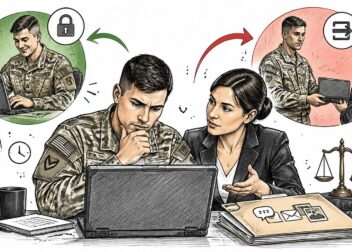
Top-tier military defense lawyers understand that the “Golden Hour” of defense occurs immediately after an allegation is made. This article explores specifically how elite counsel intervene during a military investigation to protect rights, shape the evidence, and often prevent charges from ever being filed.
1. The Wall of Silence: Mastering Article 31
The first and most critical role of a defense lawyer during an investigation is to act as an impenetrable buffer between the accused and the investigators.
Military investigators are highly trained in interrogation techniques (often the Reid Technique) designed to elicit confessions, not the truth. They feign empathy (“We just want to hear your side so we can help you”) or use intimidation (“If you don’t talk now, your commander will think you’re guilty”).
A top defense lawyer provides an immediate shield:
-
Enforcing Rights: They ensure the client invokes their Article 31 rights under the UCMJ immediately. This stops all direct questioning.
-
Ending the “Friendly” Chats: Investigators will often try to approach a suspect “off the record.” A lawyer shuts this down instantly, ensuring that no informal admissions are made that could later be twisted in court.
-
Psychological Protection: Being under investigation is isolating. Having a lawyer provides a psychological anchor, preventing the suspect from acting out of panic or desperation—actions that often lead to obstruction of justice charges.
2. The Shadow Investigation: proactive Evidence Gathering
While government investigators are working to build a case against you, who is working to find the evidence that exonerates you? If you rely on the government to find exculpatory evidence, you are gambling with your freedom.
The best military defense lawyers do not sit back and wait for the government’s discovery file. They launch a parallel “shadow investigation.”
-
Preserving Digital Evidence: In the age of social media and digital communication, texts, GPS data, and social media posts can be the difference between guilt and innocence. However, this data disappears quickly. Defense counsel moves immediately to send preservation letters to service providers or forensic experts to secure this data before it is deleted.
-
Locking Down Witnesses: Witnesses’ memories fade, or worse, their stories “evolve” after repeated coaching by government investigators. A proactive defense team interviews favorable witnesses immediately, securing sworn affidavits while the events are fresh. This prevents witnesses from changing their stories later under pressure from command or prosecution.
-
Background Checks on Accusers: In many cases, particularly those involving sexual assault or personal disputes, the credibility of the accuser is the central issue. Top lawyers investigate the motives, background, and reputation of the accuser, uncovering biases or prior false statements that investigators may have conveniently ignored.
3. Expert Consultation: The Science of Defense
Government investigators often rely on their own internal “experts” for forensic analysis—experts who work for the same team trying to convict you. A top defense lawyer levels the playing field by bringing in independent, civilian experts during the investigation phase.
-
Forensic Psychology: In sexual assault cases involving “counter-intuitive behavior” or memory gaps, a defense expert can analyze the accuser’s statements for inconsistencies that a layperson might miss.
-
Digital Forensics: If the case involves computer crimes or digital images, independent forensic examiners can often find metadata or file access logs that prove the accused had no knowledge of the illicit material.
-
Polygraphs: While polygraph results are generally inadmissible in a court-martial, a privately administered, passed polygraph can be a powerful negotiation tool. It can convince a commander or prosecutor that the case is a loser before they invest more time in it.
4. Command Advocacy: Speaking to the Decision Makers
One of the unique aspects of the military justice system is the enormous discretion held by the Convening Authority (the commander). Unlike civilian prosecutors who answer to a District Attorney, military commanders decide whether a case goes to a General Court-Martial, a Special Court-Martial, Non-Judicial Punishment (NJP), or is dismissed entirely.
Top military lawyers know how to leverage this. They don’t just talk to the JAGs; they submit “Matters in Mitigation and Extenuation” or legal briefs directly to the command before the charging decision is made.
-
The “Good Soldier” Defense: A lawyer can compile a comprehensive package of the service member’s evaluations, awards, combat history, and character letters. This reminds the commander that the accused is an asset to the unit, not just a liability.
-
Highlighting Weak Evidence: By presenting the results of the “shadow investigation” (e.g., the recanting witness, the alibi, the lack of forensic evidence) directly to the command, a lawyer can argue that proceeding to trial would be an embarrassment to the command and a waste of government resources.
-
Negotiating Alternatives: In cases where some misconduct occurred but it doesn’t warrant a federal conviction, a skilled lawyer can negotiate for an NJP or administrative separation in lieu of a court-martial. This saves the client from a federal criminal record and potential jail time.
5. Navigating Administrative Boards and 15-6 Investigations
Not all investigations lead to court-martial; some lead to administrative separation boards or Boards of Inquiry (BOI). While these are not criminal trials, the result—an Other Than Honorable (OTH) discharge—can be devastating.
-
AR 15-6 Investigations: These are informal investigations often used for complex internal matters. The “Investigating Officer” (IO) is usually just another officer, not a trained investigator. They often make procedural errors or fail to understand the legal standards of proof. A defense lawyer can guide the subject on how to answer the IO’s questions, submit written statements, and challenge the IO’s findings before they are finalized.
-
Separation Boards: If the investigation pivots to an administrative discharge, the defense lawyer fights for retention or, at a minimum, an Honorable or General discharge. They turn the board hearing into a mini-trial, cross-examining government witnesses and challenging the evidence just as aggressively as they would in a court-martial.
6. The Psychology of Control
Perhaps the most intangible but valuable asset a top lawyer brings is a sense of control. An investigation is a chaotic whirlwind. Rumors fly, peers distance themselves, and the accused feels the weight of the entire government bearing down on them.
A seasoned military defense lawyer steps into this chaos and creates order. They manage the timeline. They handle the media (if the case is high-profile). They act as the sole conduit for information. This allows the service member to focus on their mental health and their family, knowing that a professional is manning the ramparts.
Conclusion: The Cost of Inaction
Hiring a civilian military defense lawyer is a significant financial investment. However, the cost of not hiring one during the investigation phase is often far higher. A court-martial conviction can result in the loss of hundreds of thousands of dollars in retirement pay, the loss of VA benefits, the inability to find civilian employment due to a felony record, and the loss of personal liberty.
The best military defense lawyers do not view the investigation phase as a waiting period. They view it as the opening offensive. By intervening early, protecting rights, conducting independent investigations, and engaging with command leadership, they often achieve the ultimate victory: the case that never happens.
If you are under investigation, the clock is already ticking. The government has a head start. The only way to catch up—and win—is to deploy elite counsel immediately. Do not wait for the handcuffs to click; by then, the war may already be lost.